Every player's brain, measured.
Understand how each player is performing cognitively in ten minutes, so recovery, return-to-play and selection decisions run on evidence, not inference.







“We already measure the physical and tactical aspects of performance at a very high level. The real opportunity now is in better understanding cognitive load and decision-making over time. Brain health isn't a ‘nice to have’, it's fundamental to how players develop, adapt, and perform and it's an area we're excited to explore more deeply.”

Ten minutes per player. A clearer picture every week.
 01
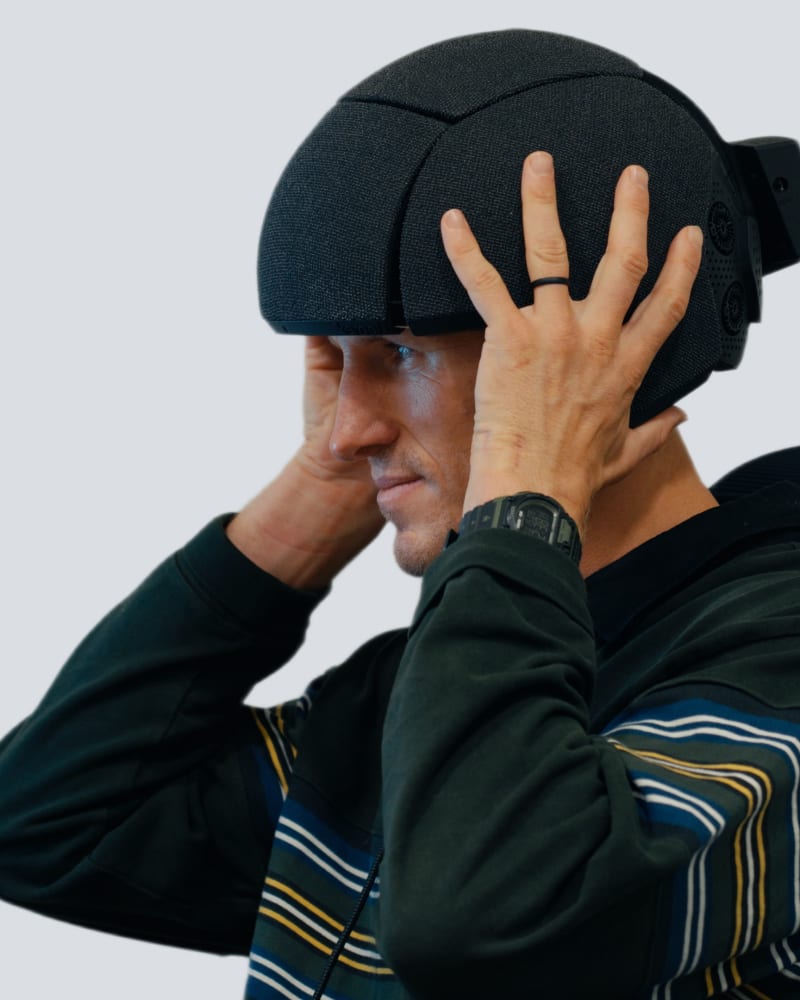
01Baseline the players
Ten minutes in the headset. Mornings, lunchtimes or evenings.
 02
02Know their brains
Attention, memory, flexibility and efficiency, explained to you the same day.
 03
03Find their rhythm
Connectome sits alongside the data clubs already collect. Understand what lifestyle habits go with better weeks.
 04
04See it change
Scan again and see where they stand. A player's brain against their own brain, not an average.
Example screens. Figures are illustrative.
The brain functions behind focus, decisions and getting things done.
Each player's Brain Profile tracks each one against their own usual range, so you can see how they're really doing.
Attention control
Staying on what matters and filtering out what doesn't.
The athlete who holds focus for an hour and loses it in the final ten minutes.
Whether focus is holding through congested periods, or quietly dropping before it shows up as a mistake.
The tasks
Short and simple. Nothing to prepare.Lifestyle links
Read next to every scan.How performance teams put it to work
Connectome sits alongside the data you already collect.
Fatigue and recovery
See who's carrying the load through congested weeks.
Pre-match readiness
Check brain state before games and track recovery in the 48 hours after.
Return-to-play
Add a brain check against their own baseline to your physical return tests.
Player development
Objective evidence of cognitive progression across a season.
Individualisation
See which inputs move with each player's scores, without changing the squad plan.
Intervention testing
See whether a protocol moved the brain beyond a player's usual range.
Used by athletes, coaches and teams


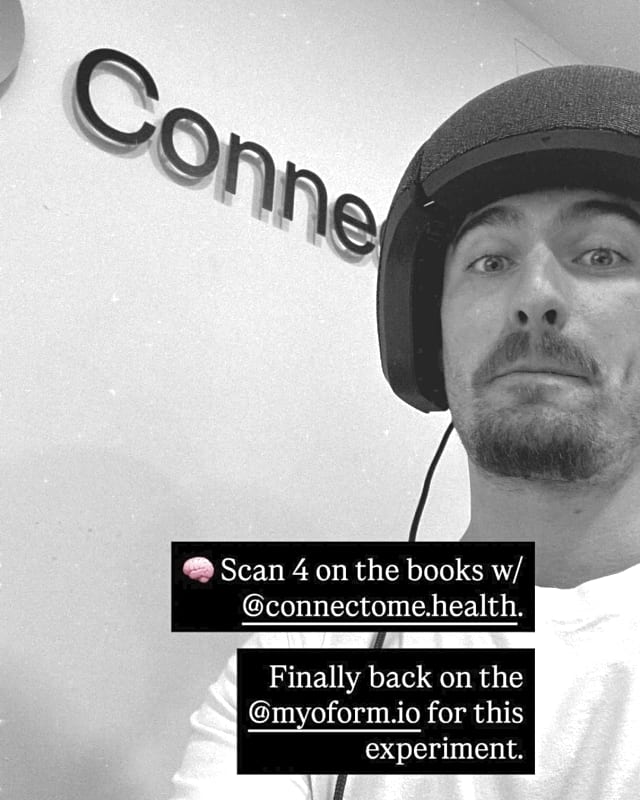


brain measurements from the part of your brain that runs your day.
Light-based sensors read blood flow across your prefrontal cortex while you work through two short tasks. That's the activity behind focus, memory and decisions, recorded as it happens.
Hundreds of channels
across the front of your brain, not a single sensor
Two signals
oxygen-rich and oxygen-poor blood, tracked separately
Nearly 5 a second
a fresh reading from every channel, for ten minutes
| Connectome | The morning wellness form | |
|---|---|---|
| What it's based on | What the brain did, measured | What the athlete says |
| Objective | Yes. You can't fake a brain scan | No. Self-reported, easy to rush, easy to game |
| Read against the athlete's own usual range | Yes, with a confidence level | Staff learn each individual's trends by eye |
| Tells you why | Links the result to sleep, load, travel and recovery | Sits beside the GPS data, not with it |
| Feeds the daily technical meeting | Yes, as a number staff can defend | Yes, as a feeling |
| Time per athlete | 4 to 10 minutes | 2 minutes |
What performance leads ask us.
Yes. A 30-player first-team and under-23 group fits across a training day with one headset, because in-season scans take four to ten minutes and time of day doesn't materially shift the metrics. Scans can be split around sessions rather than squeezed into one pre-training window.
Wearables (WHOOP, Oura, Garmin, Apple, Fitbit) connect directly. GPS and training load come in by API or CSV, and the dashboard can be used on its own or pulled into the platform your analysts already use.
No. Connectome measures brain function for wellness and performance. It is not a medical device and doesn't diagnose or screen for conditions. It gives your medical and performance staff a reliable, repeatable number to read alongside everything else they know.
It shows whether a player's brain measures have moved beyond their own usual range after the intervention, and how confident we are in that. What caused the change is for your staff to interpret. Many clubs run it as a before-and-after on sleep, travel or cognitive-training protocols.
Players own their data and see it first. Staff access is role-based and logged. Under-18s need parental or guardian consent, and academy data is ring-fenced. We build the consent flow with you before the first scan.
The method was built with Imperial College London and validated in the LUCID study (92 adults, three scans each, ICC 0.56 to 0.71). It's a preprint, not yet peer reviewed. The mental fatigue and injury figures on this page come from peer-reviewed sport science; references are in the white paper.
That's the part we spend the most time on. We run education sessions for coaches and players, the player app makes it theirs rather than something done to them, and no-comparison is a rule, not a setting. Coaches respond to peer evidence, so we'll share what other clubs have seen, anonymised.
Programmes are priced by squad size and route: scanning at our Soho clinic, or a headset and operator on site with you. Pricing is on request. Book a call and we'll put a proposal together for your board.
Most clubs start with a 20-minute call, then send a performance lead or a coach to Soho for a live scan. A pilot runs six to twelve months: a month of protocol design and data integration, then a pre-season baseline and in-season monitoring.

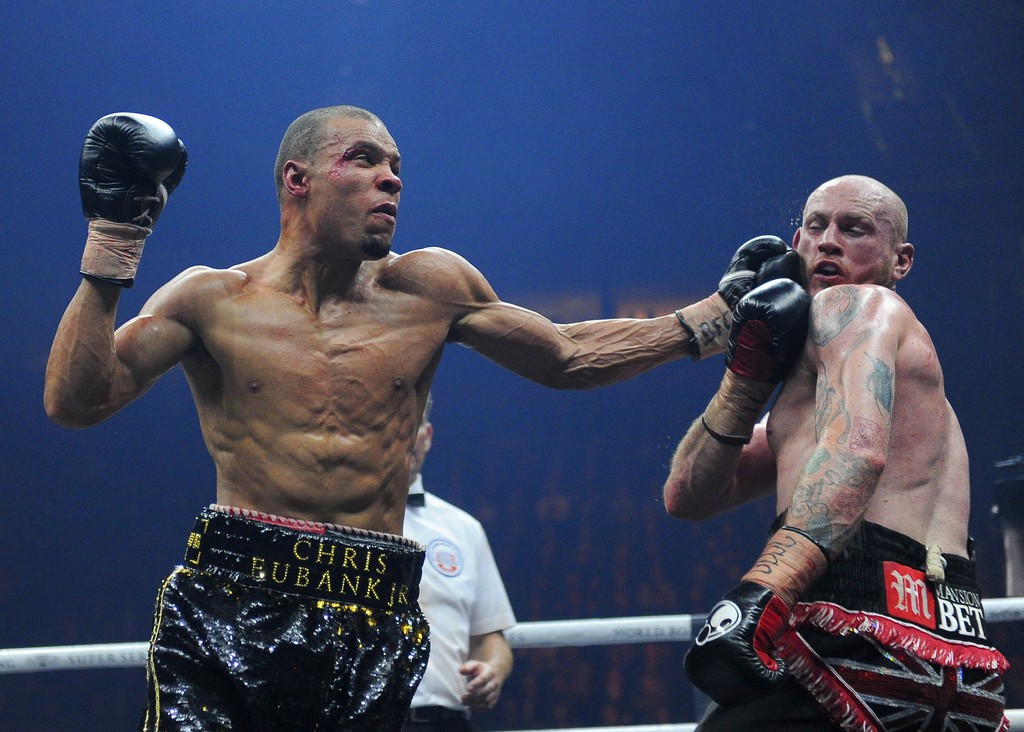


Their edge starts with ten minutes.
Ten minutes per player · Results the same day · Built around your squad
Every player's brain, measured.
Understand how each player is performing cognitively in ten minutes, so recovery, return-to-play and selection decisions run on evidence, not inference.
“We already measure the physical and tactical aspects of performance at a very high level. The real opportunity now is in better understanding cognitive load and decision-making over time. Brain health isn't a ‘nice to have’, it's fundamental to how players develop, adapt, and perform and it's an area we're excited to explore more deeply.”
Ten minutes per player. A clearer picture every week.
01Baseline the players
Ten minutes in the headset. Mornings, lunchtimes or evenings.
02Know their brains
Attention, memory, flexibility and efficiency, explained to you the same day.
03Find their rhythm
Connectome sits alongside the data clubs already collect. Understand what lifestyle habits go with better weeks.
04See it change
Scan again and see where they stand. A player's brain against their own brain, not an average.
Example screens. Figures are illustrative.
The brain functions behind focus, decisions and getting things done.
Each player's Brain Profile tracks each one against their own usual range, so you can see how they're really doing.
Attention control
Staying on what matters and filtering out what doesn't.
The athlete who holds focus for an hour and loses it in the final ten minutes.
Whether focus is holding through congested periods, or quietly dropping before it shows up as a mistake.
The tasks
Short and simple. Nothing to prepare.Lifestyle links
Read next to every scan.How performance teams put it to work
Connectome sits alongside the data you already collect.
Fatigue and recovery
See who's carrying the load through congested weeks.
Pre-match readiness
Check brain state before games and track recovery in the 48 hours after.
Return-to-play
Add a brain check against their own baseline to your physical return tests.
Player development
Objective evidence of cognitive progression across a season.
Individualisation
See which inputs move with each player's scores, without changing the squad plan.
Intervention testing
See whether a protocol moved the brain beyond a player's usual range.
Used by athletes, coaches and teams
brain measurements from the part of your brain that runs your day.
Light-based sensors read blood flow across your prefrontal cortex while you work through two short tasks. That's the activity behind focus, memory and decisions, recorded as it happens.
Hundreds of channels
across the front of your brain, not a single sensor
Two signals
oxygen-rich and oxygen-poor blood, tracked separately
Nearly 5 a second
a fresh reading from every channel, for ten minutes
| Connectome | The morning wellness form | |
|---|---|---|
| What it's based on | What the brain did, measured | What the athlete says |
| Objective | Yes. You can't fake a brain scan | No. Self-reported, easy to rush, easy to game |
| Read against the athlete's own usual range | Yes, with a confidence level | Staff learn each individual's trends by eye |
| Tells you why | Links the result to sleep, load, travel and recovery | Sits beside the GPS data, not with it |
| Feeds the daily technical meeting | Yes, as a number staff can defend | Yes, as a feeling |
| Time per athlete | 4 to 10 minutes | 2 minutes |
What performance leads ask us.
Yes. A 30-player first-team and under-23 group fits across a training day with one headset, because in-season scans take four to ten minutes and time of day doesn't materially shift the metrics. Scans can be split around sessions rather than squeezed into one pre-training window.
Wearables (WHOOP, Oura, Garmin, Apple, Fitbit) connect directly. GPS and training load come in by API or CSV, and the dashboard can be used on its own or pulled into the platform your analysts already use.
No. Connectome measures brain function for wellness and performance. It is not a medical device and doesn't diagnose or screen for conditions. It gives your medical and performance staff a reliable, repeatable number to read alongside everything else they know.
It shows whether a player's brain measures have moved beyond their own usual range after the intervention, and how confident we are in that. What caused the change is for your staff to interpret. Many clubs run it as a before-and-after on sleep, travel or cognitive-training protocols.
Players own their data and see it first. Staff access is role-based and logged. Under-18s need parental or guardian consent, and academy data is ring-fenced. We build the consent flow with you before the first scan.
The method was built with Imperial College London and validated in the LUCID study (92 adults, three scans each, ICC 0.56 to 0.71). It's a preprint, not yet peer reviewed. The mental fatigue and injury figures on this page come from peer-reviewed sport science; references are in the white paper.
That's the part we spend the most time on. We run education sessions for coaches and players, the player app makes it theirs rather than something done to them, and no-comparison is a rule, not a setting. Coaches respond to peer evidence, so we'll share what other clubs have seen, anonymised.
Programmes are priced by squad size and route: scanning at our Soho clinic, or a headset and operator on site with you. Pricing is on request. Book a call and we'll put a proposal together for your board.
Most clubs start with a 20-minute call, then send a performance lead or a coach to Soho for a live scan. A pilot runs six to twelve months: a month of protocol design and data integration, then a pre-season baseline and in-season monitoring.
Their edge starts with ten minutes.
Ten minutes per player · Results the same day · Built around your squad